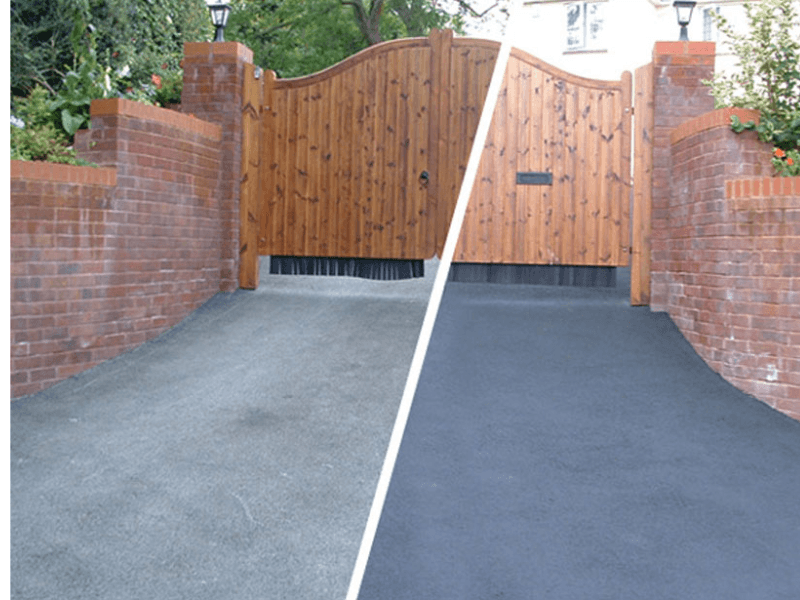
Tarmac that has ‘gone grey’ isn’t dirty. The bitumen has oxidised — the surface binder has broken down under UV and weather. Cleaning won’t fix it, and resurfacing is overkill. Here’s what actually works.
How tarmac fades
Bitumen is a black, sticky binder that holds aggregate (stone) together. Sun, rain and frost break down the binder over years, leaving the surface looking grey and porous. The structure is usually still sound — it’s just lost its colour and waterproofing.
What restoration does
- Clean and prep the surface — pressure wash, remove weeds, fix any potholes.
- Apply a bitumen-based tarmac restorer that re-blacks the binder and seals the surface.
- Allow to cure — typically 24 hours before driving on it.
How long does it last?
A quality tarmac restorer holds its colour for 3–5 years depending on UV exposure and traffic. After that you can re-coat — much cheaper than resurfacing.
When restoration isn’t the answer
- Cracks wider than 5mm — needs filling first.
- Major potholes or structural failure — needs patching or partial resurface.
- Tarmac that’s been overlaid on a failing sub-base — restoration won’t fix what’s underneath.
Ready to sort yours?
Get a tarmac restoration quote →